
Should Your Med Spa Promote Treatment Packages or Individual Services?

Most med spas should promote both, but for different decisions. Individual services give new patients a clear, low-commitment entry point. Packages make sense when multiple appointments form a legitimate, clinician-directed pathway and the terms are easy to understand. The offer should follow the patient journey, not force every visitor into the highest upfront commitment.
Key Takeaways
- Lead with an individual service when suitability or trust is still unresolved.
- Use packages for a coherent sequence, not a random bundle of treatments.
- Explain inclusions, timing, expiration, refund, transfer, and cancellation terms clearly.
- Keep clinical recommendations separate from promotional pressure.
- Compare qualified bookings, completion, retention, and refunds, not revenue alone.
When Should a Med Spa Lead With an Individual Service?
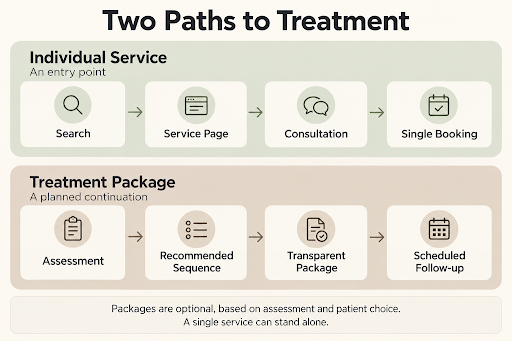
Individual services usually work better when the visitor is new, uncertain, or comparing providers. A first-time patient may want to understand the treatment, meet the team, and learn whether the option is suitable before paying for a series.
They also fit services that are commonly purchased one appointment at a time, have variable follow-up needs, or require an assessment before a plan can be discussed. The website can still explain that a series may be recommended, but it should not imply that every person needs the same schedule.
Individual services reduce the number of commitments a new patient must make at once. They can be particularly useful for:
- A first appointment or consultation-led pathway
- Services with highly individualized frequency
- Visitors arriving from a treatment-specific search or ad
- Seasonal or event-driven demand
- Patients who need to understand the provider relationship first
This does not mean the page should be thin. A strong individual-service page should cover suitability, process, limitations, preparation, aftercare, price information when the practice chooses to publish it, and the next step. Aestheticians Digital describes treatment-specific landing pages for med spas as part of connecting search intent with a clearer consultation path.
When Does a Treatment Package Make Sense?
A package makes sense when the included appointments have a clear relationship and the practice can explain why the sequence exists. That relationship might be a planned series of the same service, a staged pathway, or a combination that qualified clinicians commonly recommend for a defined goal.
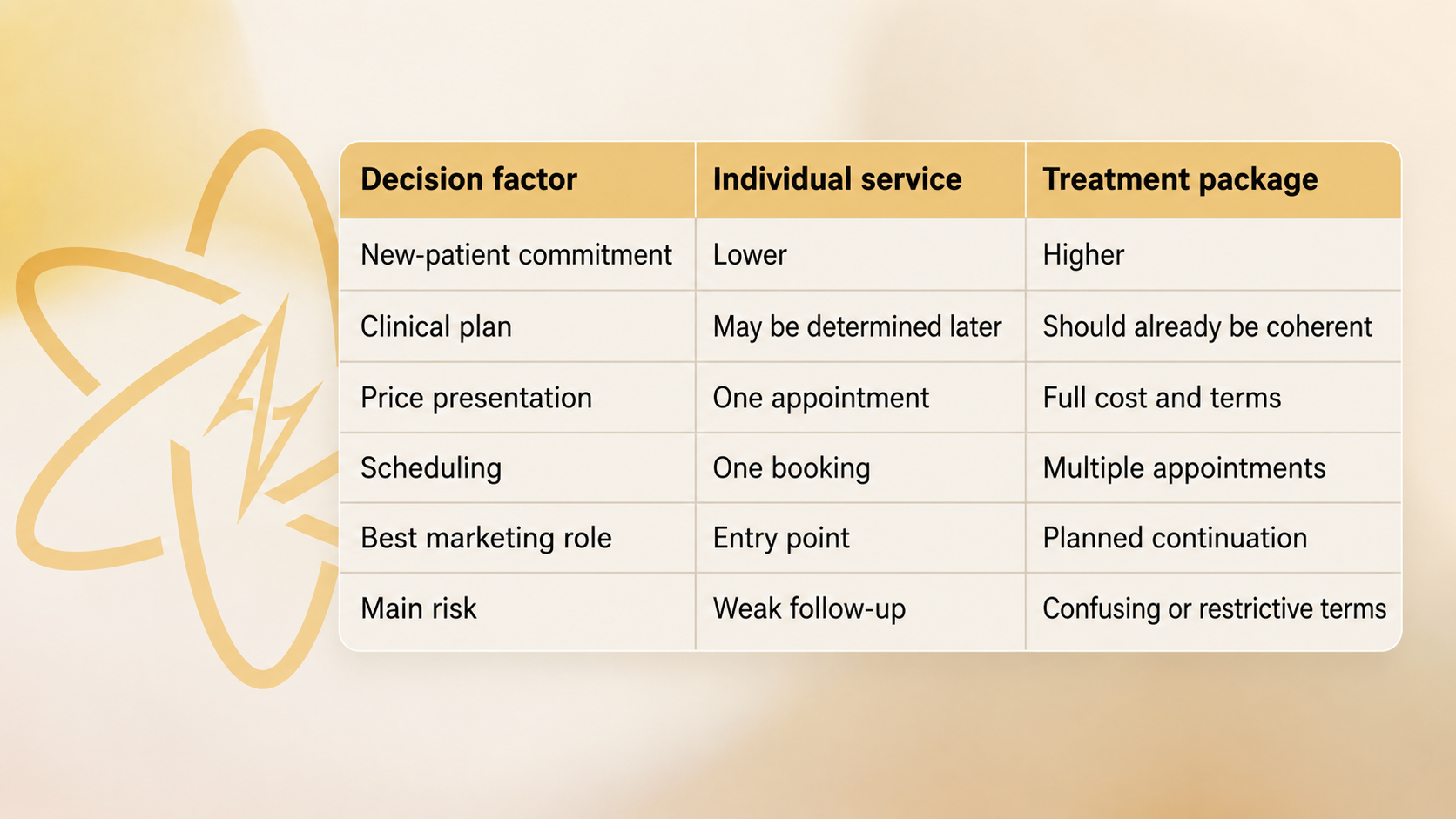
A package should not be a miscellaneous bundle built only to increase the ticket. If the components do not belong together clinically or operationally, the marketing will have to work too hard to explain the value.
The American Med Spa Association’s discussion of service-mix strategy recommends evaluating factors such as margin profile, capital investment, repeat behavior, and cross-selling potential. Those business factors matter, but they should not replace clinical appropriateness or informed choice.
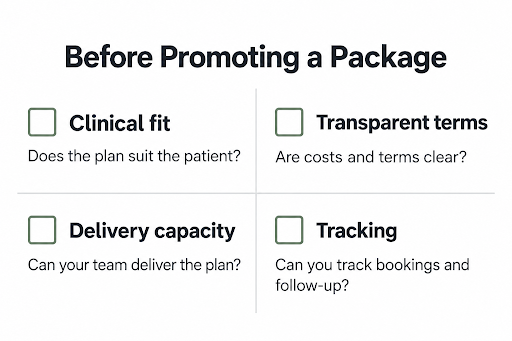
A package is strongest when the care logic and the commercial logic point in the same direction. Before promotion, confirm that the team can deliver the full sequence, schedule it realistically, explain changes if the plan evolves, and handle unused value consistently.
How Should You Market Treatment Packages Responsibly?
Start with clarity. State what is included, the total price, whether appointments must be used within a certain period, and what happens if the patient is no longer suitable for a treatment. Explain refund, transfer, cancellation, and rescheduling terms before payment.
Recurring memberships require a separate compliance review from fixed, prepaid packages. In July 2025, a federal appeals court vacated the FTC’s amended “click-to-cancel” rule. The FTC opened a new review in 2026, as explained in its current Negative Option Rule proceeding. Existing federal and state consumer-protection requirements may still apply, so practices should obtain current legal guidance for automatic renewals rather than relying on an old checklist.
For all offers, avoid urgency that interferes with an informed treatment decision. A countdown timer or “buy now, decide later” promotion is a poor fit when a clinician still needs to assess suitability. The same caution applies to financing language and nonrefundable terms.
Marketing claims also need support. The FTC’s health advertising guidance explains that marketers are responsible for express and implied claims, including the overall impression created by testimonials, images, and disclosures. Do not turn a package name into an unsupported outcome promise.
Your website and front-desk script should answer the same questions:
- Who is the package designed for?
- What exactly is included?
- Who determines whether it is suitable?
- What happens if the plan changes?
- When does unused value expire?
- Are there recurring charges?
- How can the patient cancel or request a refund where applicable?
Consistency reduces surprises. It also helps marketing and operations diagnose whether a problem comes from the offer, the page, the consultation, or follow-up.
How Do You Know Which Offer Performs Better?
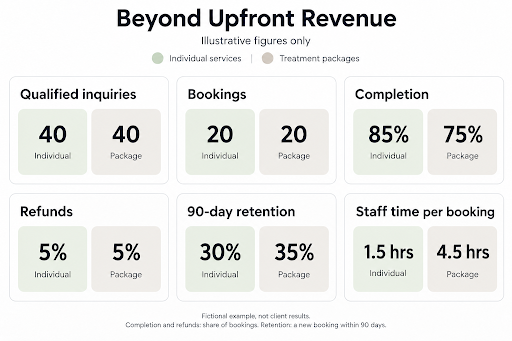
Do not compare packages and individual services only by the revenue collected on day one. A large prepaid amount may look attractive while hiding refunds, unused balances, scheduling strain, or poor completion. An individual service may produce a smaller first transaction but a healthier long-term relationship.
Choose measures that match the offer:
- Qualified inquiry rate
- Booking completion rate
- Consultation-to-purchase rate
- Package completion and unused balances
- Refunds, disputes, and cancellations
- Rebooking and retention
- Staff time required to explain or repair the offer
Run a defined test rather than changing the page, discount, ad audience, and follow-up sequence at the same time. Segment new and returning patients because their willingness to commit may differ. Note capacity constraints, seasonality, and treatment availability when interpreting results.
Google recommends creating helpful, reliable content that answers the audience’s real questions and avoids exaggerated titles. For package pages, that means addressing price structure, suitability, timing, and limitations, not simply repeating “save more” in larger type.
Aestheticians Digital builds marketing systems for aesthetic practices, including websites, acquisition, and follow-up. If your current offers create plenty of inquiries but poor-fit bookings, book a strategy conversation to examine the complete path from offer to consultation and rebooking.
Frequently Asked Questions
Most med spas should promote both, but for different decisions. Individual services give new patients a clear, low-commitment entry point. Packages make sense when multiple appointments form a legitimate, clinician-directed pathway and the terms are easy to understand. The offer should follow the patient journey, not force every visitor into the highest upfront commitment.
Key Takeaways
- Lead with an individual service when suitability or trust is still unresolved.
- Use packages for a coherent sequence, not a random bundle of treatments.
- Explain inclusions, timing, expiration, refund, transfer, and cancellation terms clearly.
- Keep clinical recommendations separate from promotional pressure.
- Compare qualified bookings, completion, retention, and refunds, not revenue alone.
When Should a Med Spa Lead With an Individual Service?
Individual services usually work better when the visitor is new, uncertain, or comparing providers. A first-time patient may want to understand the treatment, meet the team, and learn whether the option is suitable before paying for a series.
They also fit services that are commonly purchased one appointment at a time, have variable follow-up needs, or require an assessment before a plan can be discussed. The website can still explain that a series may be recommended, but it should not imply that every person needs the same schedule.
Individual services reduce the number of commitments a new patient must make at once. They can be particularly useful for:
- A first appointment or consultation-led pathway
- Services with highly individualized frequency
- Visitors arriving from a treatment-specific search or ad
- Seasonal or event-driven demand
- Patients who need to understand the provider relationship first
This does not mean the page should be thin. A strong individual-service page should cover suitability, process, limitations, preparation, aftercare, price information when the practice chooses to publish it, and the next step. Aestheticians Digital describes treatment-specific landing pages for med spas as part of connecting search intent with a clearer consultation path.
When Does a Treatment Package Make Sense?
A package makes sense when the included appointments have a clear relationship and the practice can explain why the sequence exists. That relationship might be a planned series of the same service, a staged pathway, or a combination that qualified clinicians commonly recommend for a defined goal.
A package should not be a miscellaneous bundle built only to increase the ticket. If the components do not belong together clinically or operationally, the marketing will have to work too hard to explain the value.
The American Med Spa Association’s discussion of service-mix strategy recommends evaluating factors such as margin profile, capital investment, repeat behavior, and cross-selling potential. Those business factors matter, but they should not replace clinical appropriateness or informed choice.
A package is strongest when the care logic and the commercial logic point in the same direction. Before promotion, confirm that the team can deliver the full sequence, schedule it realistically, explain changes if the plan evolves, and handle unused value consistently.
How Should You Market Treatment Packages Responsibly?
Start with clarity. State what is included, the total price, whether appointments must be used within a certain period, and what happens if the patient is no longer suitable for a treatment. Explain refund, transfer, cancellation, and rescheduling terms before payment.
Recurring memberships require a separate compliance review from fixed, prepaid packages. In July 2025, a federal appeals court vacated the FTC’s amended “click-to-cancel” rule. The FTC opened a new review in 2026, as explained in its current Negative Option Rule proceeding. Existing federal and state consumer-protection requirements may still apply, so practices should obtain current legal guidance for automatic renewals rather than relying on an old checklist.
For all offers, avoid urgency that interferes with an informed treatment decision. A countdown timer or “buy now, decide later” promotion is a poor fit when a clinician still needs to assess suitability. The same caution applies to financing language and nonrefundable terms.
Marketing claims also need support. The FTC’s health advertising guidance explains that marketers are responsible for express and implied claims, including the overall impression created by testimonials, images, and disclosures. Do not turn a package name into an unsupported outcome promise.
Your website and front-desk script should answer the same questions:
- Who is the package designed for?
- What exactly is included?
- Who determines whether it is suitable?
- What happens if the plan changes?
- When does unused value expire?
- Are there recurring charges?
- How can the patient cancel or request a refund where applicable?
Consistency reduces surprises. It also helps marketing and operations diagnose whether a problem comes from the offer, the page, the consultation, or follow-up.
How Do You Know Which Offer Performs Better?
Do not compare packages and individual services only by the revenue collected on day one. A large prepaid amount may look attractive while hiding refunds, unused balances, scheduling strain, or poor completion. An individual service may produce a smaller first transaction but a healthier long-term relationship.
Choose measures that match the offer:
- Qualified inquiry rate
- Booking completion rate
- Consultation-to-purchase rate
- Package completion and unused balances
- Refunds, disputes, and cancellations
- Rebooking and retention
- Staff time required to explain or repair the offer
Run a defined test rather than changing the page, discount, ad audience, and follow-up sequence at the same time. Segment new and returning patients because their willingness to commit may differ. Note capacity constraints, seasonality, and treatment availability when interpreting results.
Google recommends creating helpful, reliable content that answers the audience’s real questions and avoids exaggerated titles. For package pages, that means addressing price structure, suitability, timing, and limitations, not simply repeating “save more” in larger type.
Aestheticians Digital builds marketing systems for aesthetic practices, including websites, acquisition, and follow-up. If your current offers create plenty of inquiries but poor-fit bookings, book a strategy conversation to examine the complete path from offer to consultation and rebooking.
Frequently Asked Questions

At Aestheticians Digital, big ideas deserve bold execution.
Table of Content
Get insghts that drive results.
Contact us for strategy, design tips, and industry insights—straight to your inbox.


MEET THE AUTORS


© Copyright 2026 | Design & Developed By Aesthetics Digital LLC.